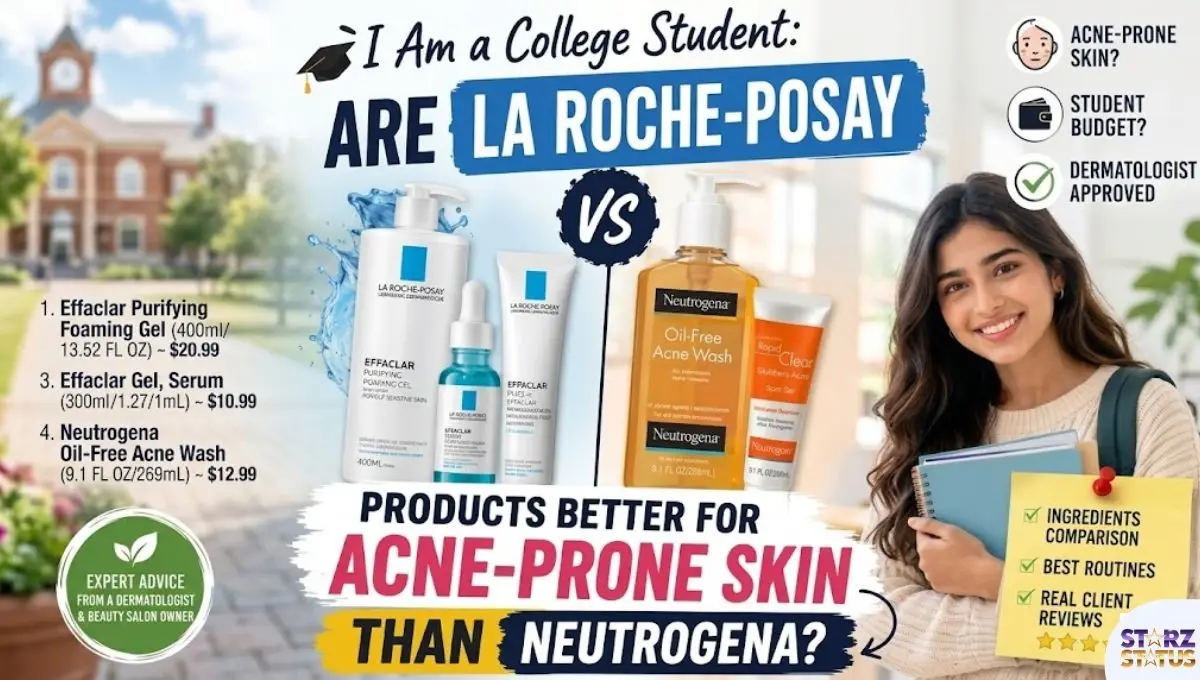
If you are comparing La Roche-Posay vs Neutrogena for acne-prone skin, the simple answer is this: La Roche-Posay is often better for sensitive, irritated, or barrier-damaged acne-prone skin, while Neutrogena is usually better for students who want affordable, easy-to-find acne-fighting skincare products.
Both brands make popular acne-prone skin products with ingredients like salicylic acid, benzoyl peroxide, niacinamide, and hyaluronic acid. But the best choice depends on your skin type, budget, acne severity, and how well your skin tolerates active ingredients.
For a college student, the best skincare for acne-prone skin is not always the most expensive brand. It is the routine you can use consistently without irritating your skin or breaking your budget.
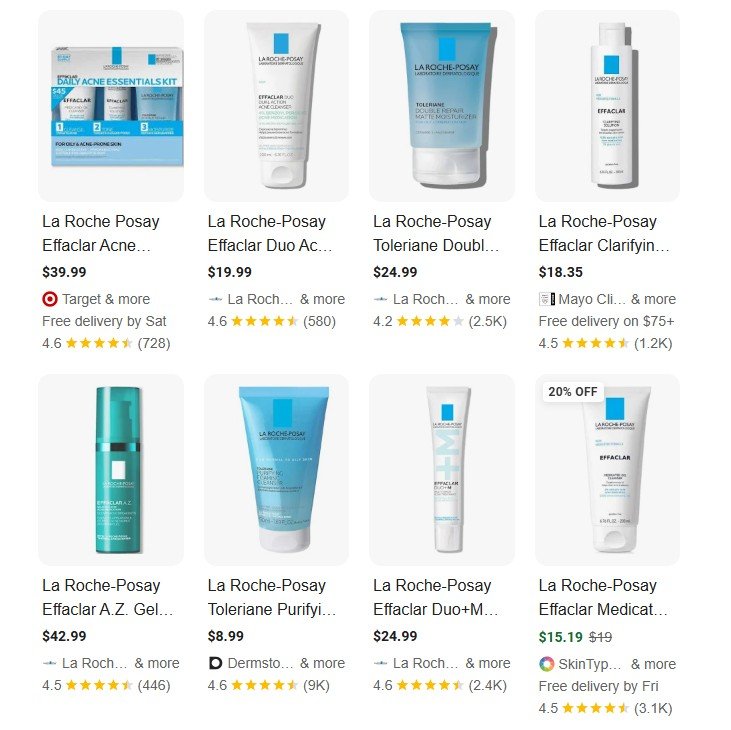
Are La Roche-Posay Products Better for Acne-Prone Skin Than Neutrogena? Complete Comparison Guide
La Roche-Posay may be better if your acne-prone skin is sensitive, red, dry, or easily irritated. Neutrogena may be a better option if you need budget-friendly acne treatment products that are widely available and easy to use.
This acne treatment comparison is not about choosing one brand as “good” and the other as “bad.” Both brands offer dermatologist-tested, non-comedogenic skincare for breakouts, clogged pores, oily skin, blackheads, and whiteheads.
Here is a quick comparison:
| Category | La Roche-Posay | Neutrogena |
|---|---|---|
| Best for | Sensitive acne-prone skin, redness, skin barrier support | Budget acne care, oily skin, easy availability |
| Common acne ingredients | Salicylic acid, benzoyl peroxide, niacinamide, lipo-hydroxy acid, thermal spring water | Salicylic acid, benzoyl peroxide, hyaluronic acid, oil-free formulas |
| Price range | Usually mid-range to higher | Usually affordable to mid-range |
| Texture | Often lightweight, gentle, barrier-friendly | Often gel, foaming, oil-control, acne-focused |
| Student-friendly | Good, but may be expensive | Very student-friendly |
| Sensitive skin support | Stronger focus | Depends on product |
| Oil control | Good | Very good for oily skin |
| Availability | Pharmacies, dermatology stores, online | Drugstores, supermarkets, online |
| Best overall use | Sensitive or combination acne-prone skin | Oily, budget-conscious acne-prone skin |
Understanding Acne-Prone Skin
Acne-prone skin develops breakouts when pores become clogged with oil, dead skin cells, and sometimes acne-causing bacteria.
For college students, acne can become worse because of stress, irregular sleep, hormonal changes, sweat, makeup, diet changes, and inconsistent skincare routines. Oily skin and excess sebum production can also make clogged pores more common.
Common signs of acne-prone skin include:
- Blackheads
- Whiteheads
- Red pimples
- Inflamed bumps
- Clogged pores
- Oily T-zone
- Breakouts around the jawline, forehead, cheeks, or chin
Acne-prone skin does not always mean oily skin. Some people have dry acne-prone skin, where the skin feels tight but still breaks out. Others have combination skin, where the forehead and nose are oily, but the cheeks feel dry or sensitive.
A good acne skincare routine should focus on three things: clearing pores, controlling oil, and protecting the skin barrier. If you only use harsh acne control products and skip moisturizer, your skin may become irritated, dry, and more reactive.
Overview of La Roche-Posay
La Roche-Posay is often considered a strong option for sensitive skin acne products because many of its formulas focus on tolerance, redness reduction, and skin barrier repair.
The brand is commonly associated with dermatologist-recommended acne products, especially its Effaclar line for oily and acne-prone skin. Many La Roche-Posay products use ingredients such as salicylic acid, benzoyl peroxide, niacinamide, hyaluronic acid, and lipo-hydroxy acid.
For students with sensitive skin, La Roche-Posay may feel less aggressive than some strong drugstore acne products. It is often a good choice if your skin reacts badly to harsh scrubs, strong fragrance, or drying formulas.
La Roche-Posay is especially useful for:
- Sensitive acne-prone skin
- Redness-prone skin
- Dry acne-prone skin
- Combination skin
- Irritated skin barrier
- Mild to moderate acne
- Students using acne treatments for the first time
The main downside is price. La Roche-Posay can be more expensive than Neutrogena, which may matter if you are a college student buying cleanser, moisturizer, and sunscreen every month.
Also Read: Elmer Heinrich Net Worth, Wife, Family, Age | 2026
Overview of Neutrogena
Neutrogena is often better for students who want affordable, accessible, and straightforward acne-fighting skincare products.
Neutrogena is widely known for face wash for acne-prone skin, salicylic acid face wash, benzoyl peroxide acne treatment, oil-free moisturizers, and products for blackheads and oily skin. It is easy to find in drugstores, supermarkets, and online.
For budget-conscious buyers, Neutrogena can be a practical first choice. Many of its acne control products are simple, familiar, and designed for oily or breakout-prone skin.
Neutrogena is especially useful for:
- Oily acne-prone skin
- Teen acne
- College student skincare routine
- Blackheads and whiteheads
- Mild breakouts
- Budget skincare routines
- Students who want easy product availability
The downside is that some acne products may feel drying or irritating, especially if used too often. If your skin is sensitive, start slowly and avoid using several active products at once.
Ingredient Comparison Between Both Brands
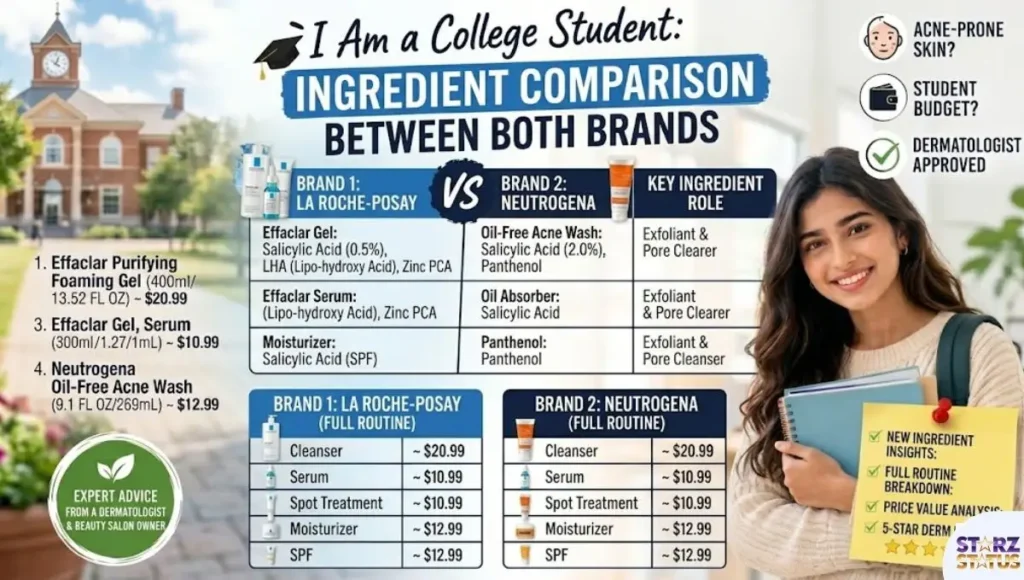
The best acne skincare brand is usually the one with ingredients that match your acne type and skin tolerance.
La Roche-Posay and Neutrogena both use proven acne-fighting ingredients, but they often feel different on the skin. Neutrogena usually focuses on simple, direct acne control products. La Roche-Posay often combines acne treatment with skin barrier support.
| Ingredient | What It Does | Better For | Found in Both Brands? |
| Salicylic acid | Helps clear clogged pores and exfoliate inside pores | Blackheads, whiteheads, oily skin | Yes |
| Benzoyl peroxide | Targets acne-causing bacteria and inflamed pimples | Red pimples, inflammatory acne | Yes |
| Niacinamide | Supports skin barrier, reduces redness, helps oil balance | Sensitive skin, redness, uneven tone | More common in La Roche-Posay acne formulas |
| Hyaluronic acid | Hydrates without heaviness | Dehydrated acne-prone skin | Yes, more common in hydrating lines |
| Lipo-hydroxy acid | Gentle exfoliation and pore-clearing support | Sensitive clogged pores | More associated with La Roche-Posay |
| Non-comedogenic formula | Helps reduce risk of pore clogging | Acne-prone skin | Yes |
Salicylic Acid
Salicylic acid is best for clogged pores, blackheads, whiteheads, and oily skin.
It is a beta-hydroxy acid that helps exfoliate inside the pore. This makes it useful for students dealing with blackheads on the nose, small bumps on the forehead, or recurring whiteheads.
Neutrogena is well known for salicylic acid face wash options. These can be useful if you want a simple cleanser for oily skin treatment. La Roche-Posay also offers salicylic acid products, often with additional soothing or barrier-supporting ingredients.
Choose salicylic acid if your acne looks like:
- Blackheads
- Whiteheads
- Clogged pores
- Small bumps
- Oily skin with texture
Do not overuse it. A salicylic acid face wash once daily or a few times per week may be enough for many people.
Benzoyl Peroxide
Benzoyl peroxide is best for red, inflamed pimples because it helps reduce acne-causing bacteria on the skin.
This ingredient can be very helpful for inflammatory acne, but it can also cause dryness, peeling, and irritation. It may also bleach towels, pillowcases, and clothing, so students should be careful when applying it before bed.
Neutrogena offers benzoyl peroxide spot treatments and acne treatments at different strengths. La Roche-Posay also has benzoyl peroxide acne products in some markets.
Choose benzoyl peroxide if your acne looks like:
- Red pimples
- Inflamed bumps
- Stubborn breakouts
- Breakouts that feel sore
- Acne that does not improve with only salicylic acid
If you have sensitive skin, start with a lower strength or use it only as a spot treatment. More strength does not always mean better results.
Niacinamide
Niacinamide is helpful for acne-prone skin because it supports the skin barrier, helps calm redness, and may help balance oiliness.
This is one reason La Roche-Posay may be better for sensitive, acne-prone skin. Niacinamide can be useful when your skin gets red, irritated, or dry from acne treatments.
Neutrogena also has hydrating and barrier-supporting products, but La Roche-Posay often highlights niacinamide in acne and sensitive skin formulas.
Choose niacinamide if you have:
- Redness
- Sensitive skin
- Irritated skin barrier
- Oily but dehydrated skin
- Post-breakout marks
- Dryness from acne products
Niacinamide is not a quick pimple treatment. It works better as a support ingredient in a consistent acne prevention routine.
Which Brand Is Better for Sensitive Skin?
La Roche-Posay is usually the better choice for sensitive, acne-prone skin.
If your skin stings after cleansing, turns red easily, or feels tight after using acne products, you need a gentle acne cleanser and barrier-supporting moisturizer. La Roche-Posay often performs well here because many of its products are designed for sensitive skin and acne-prone skin at the same time.
Look for:
- Fragrance-free skincare
- Non-comedogenic formula
- Gentle acne cleanser
- Niacinamide
- Hyaluronic acid
- Lightweight moisturizer
- Barrier repair support
Neutrogena can still work for sensitive skin, but you need to choose carefully. Avoid using a strong salicylic acid cleanser, benzoyl peroxide acne treatment, and exfoliating toner all in the same routine if your skin is reactive.
For sensitive skin, the goal is not to “dry out” acne. The goal is to reduce breakouts while keeping the skin barrier healthy.
Which Brand Controls Oil Better?
Neutrogena is often a strong choice for oily skin treatment because many of its acne products focus on oil control, pore clearing, and lightweight textures.
If you have a shiny forehead, greasy nose, blackheads, and clogged pores, a Neutrogena salicylic acid face wash may be a practical and affordable option.
La Roche-Posay also has good oil-control products, especially in the Effaclar line. It may be better if your oily skin is also sensitive or easily irritated.
For oily acne-prone skin, look for:
- Oil-free moisturizer
- Salicylic acid
- Non-comedogenic skincare
- Lightweight sunscreen
- Gentle foaming cleanser
- Pore-clearing products
Avoid harsh scrubs. Scrubbing oily skin can irritate the skin barrier and make breakouts look worse.
Price Comparison
Neutrogena is usually more budget-friendly, while La Roche-Posay usually costs more but may offer better comfort for sensitive, acne-prone skin.
Prices vary by country, store, size, and sales. For college students, the smartest routine is usually a simple three-step routine: cleanser, moisturizer, sunscreen. Add acne treatment only if needed.
| Product Type | Neutrogena Budget Level | La Roche-Posay Budget Level | Student-Friendly Winner |
| Acne cleanser | Low to mid | Mid | Neutrogena |
| Acne spot treatment | Low to mid | Mid to higher | Neutrogena |
| Oil-free moisturizer | Low to mid | Mid to higher | Neutrogena |
| Sensitive skin moisturizer | Mid | Mid to higher | La Roche-Posay |
| Sunscreen | Mid | Mid to higher | Depends on budget |
| Complete routine cost | Usually lower | Usually higher | Neutrogena |
Neutrogena
Neutrogena is usually better for students who want affordable acne skincare without buying too many products.
A simple Neutrogena routine may include a salicylic acid cleanser, oil-free moisturizer, and sunscreen. If needed, you can add benzoyl peroxide as a spot treatment for red pimples.
Best for:
- Tight student budgets
- Oily skin
- Drugstore availability
- Simple acne control products
- Beginners building an acne skincare routine
Be careful not to buy every acne product in the same line. Too many active ingredients can irritate your skin.
La Roche-Posay
La Roche-Posay is usually better for students who can spend a little more for sensitive skin support and a gentler feel.
A simple La Roche-Posay routine may include a gentle cleanser, Effaclar acne treatment, barrier-supporting moisturizer, and sunscreen. It may cost more upfront, but it can be worth it if cheaper products leave your skin dry, red, or burning.
Best for:
- Sensitive acne-prone skin
- Redness-prone skin
- Dry acne-prone skin
- Skin barrier repair
- Combination skin
- Students who want dermatologist-style skincare
If you are on a budget, you do not need a full La Roche-Posay routine. You can choose one key product, such as a cleanser or moisturizer, and use budget-friendly options for the rest.
Product Availability Comparison
Neutrogena is usually easier to find in drugstores and supermarkets, while La Roche-Posay is often found in pharmacies, dermatology-focused stores, and online skincare retailers.
For college students, availability matters. If you run out of cleanser during exam week, you need something easy to replace.
Neutrogena is often easier to find in:
- Drugstores
- Supermarkets
- Online stores
- Campus-area shops
- Budget beauty sections
La Roche-Posay is often available in:
- Pharmacies
- Dermatology clinics
- Online skincare stores
- Beauty retailers
- Larger drugstores
If you travel between home and college, choose acne-prone skin products that are easy to repurchase. Constantly switching products can make it harder to understand what is helping or irritating your skin.
Which Brand Is Better for Different Skin Types?
The better brand depends on whether your skin is oily, sensitive, dry, combination, or dealing with moderate to severe acne.
Here is a simple skin type recommendation table:
| Skin Type or Concern | Better Choice | Why |
| Oily acne-prone skin | Neutrogena or La Roche-Posay Effaclar | Both offer oil-control and pore-clearing products |
| Sensitive acne-prone skin | La Roche-Posay | Better focus on tolerance, redness, and barrier support |
| Dry acne-prone skin | La Roche-Posay | Often better for hydration and skin barrier repair |
| Combination skin | La Roche-Posay | Good balance of acne care and comfort |
| Tight student budget | Neutrogena | More affordable and widely available |
| Blackheads and clogged pores | Neutrogena or La Roche-Posay | Look for salicylic acid or lipo-hydroxy acid |
| Red inflamed pimples | Both | Look for benzoyl peroxide, but introduce it slowly |
| Hormonal acne | Neither brand alone may be enough | A dermatologist may be needed |
| Severe or painful acne | Dermatologist care | OTC products may not be enough |
Oily Acne-Prone Skin
For oily acne-prone skin, Neutrogena may be the better first choice because it is affordable and strong for oil control.
A salicylic acid cleanser can help with clogged pores and excess sebum production. Pair it with an oil-free moisturizer so your skin does not become dehydrated.
La Roche-Posay is also a good option if your oily skin gets irritated easily. Its Effaclar products can help with breakouts while being more skin-barrier focused.
Sensitive Acne-Prone Skin
For sensitive acne-prone skin, La Roche-Posay is usually the better option.
Sensitive skin needs acne control without too much dryness or burning. Look for fragrance-free skincare, niacinamide, gentle cleansers, and moisturizers that support the skin barrier.
If you choose Neutrogena, avoid harsh scrubs and do not combine too many acne actives at once. Start with one product and give your skin time to adjust.
Dry Acne-Prone Skin
For dry acne-prone skin, La Roche-Posay is often better because dry skin needs acne care plus hydration and barrier repair.
Dry acne-prone skin can be tricky. You may have pimples, but your skin may also peel, sting, or feel tight. Strong acne control products can make this worse.
Choose a gentle acne cleanser or even a non-acne hydrating cleanser, then use a non-comedogenic moisturizer. Do not skip moisturizer just because you have acne.
Moderate to Severe Acne
For moderate to severe acne, neither La Roche-Posay nor Neutrogena should be your only plan if you have painful cysts, scarring, or acne that does not improve.
Over-the-counter acne-fighting skincare products can help mild breakouts, clogged pores, blackheads, and some inflamed pimples. But severe acne may need prescription treatment.
See a dermatologist if you have:
- Painful cystic acne
- Acne scars
- Deep bumps under the skin
- Breakouts that last for months
- Acne affecting your confidence or mental health
- No improvement after 8–12 weeks of consistent routine
A dermatologist may recommend prescription retinoids, stronger benzoyl peroxide combinations, antibiotics, hormonal acne treatment, or other medical options.
Best La Roche-Posay and Neutrogena Products for College Students on a Budget
The best college student skincare routine should be simple, affordable, and consistent. You do not need a 10-step routine to manage acne-prone skin.
Start with these categories:
| Routine Step | What to Look For | Why It Helps |
| Cleanser | Gentle acne cleanser or salicylic acid face wash | Removes oil, sweat, sunscreen, and buildup |
| Treatment | Salicylic acid or benzoyl peroxide | Targets clogged pores or inflamed pimples |
| Moisturizer | Oil-free, non-comedogenic moisturizer | Protects skin barrier and reduces dryness |
| Sunscreen | Lightweight, non-comedogenic sunscreen | Helps prevent irritation and post-acne marks from darkening |
Top Budget-Friendly Neutrogena Acne Treatments
Neutrogena is a strong budget pick for students who want simple acne control products.
Good Neutrogena-style options to consider include:
- Salicylic acid face wash for oily skin and clogged pores
- Oil-free acne wash for daily cleansing
- Benzoyl peroxide acne treatment for red pimples
- Oil-free moisturizer for hydration without heaviness
- Non-comedogenic sunscreen for daytime use
Best for students who have:
- Oily skin
- Blackheads
- Whiteheads
- Mild breakouts
- Limited skincare budget
- Easy access to drugstores
Student tip: If you use a salicylic acid cleanser, do not also use a strong exfoliating toner every night. That combination can irritate your skin.
Best Value La Roche-Posay Products for Students
La Roche-Posay is the best value when you choose products that solve a specific problem, such as sensitivity, redness, or barrier damage.
Good La Roche-Posay-style options to consider include:
- Effaclar cleanser for acne-prone and oily skin
- Acne treatment with salicylic acid or benzoyl peroxide
- Niacinamide-based moisturizer or treatment
- Gentle hydrating cleanser for dry acne-prone skin
- Lightweight sunscreen for acne-prone skin
Best for students who have:
- Sensitive skin
- Redness
- Dryness from acne products
- Combination skin
- Irritated skin barrier
- Breakouts plus skin discomfort
Student tip: If you cannot afford a full La Roche-Posay routine, buy one product that matters most for your skin, such as a gentle cleanser or moisturizer, and keep the rest of your routine affordable.
La Roche-Posay vs Neutrogena: Pros and Cons for Acne-Prone Skin
Both brands can work for acne-prone skin, but they serve different needs.
| Brand | Pros | Cons |
| La Roche-Posay | Good for sensitive skin, redness reducing skincare, barrier support, dermatologist-style formulas, acne, and oily skin lines | More expensive, not always available everywhere, some products may still irritate very sensitive skin |
| Neutrogena | Affordable, widely available, strong acne cleanser options, good for oily skin, easy for beginners | Some acne products may feel drying, sensitive skin users must choose carefully, fragrance varies by product |
Choose La Roche-Posay if:
- Your skin is sensitive or red
- Acne products usually burn or sting
- You need skin barrier repair
- You have dry acne-prone skin
- You want a gentler acne prevention routine
Choose Neutrogena if:
- You are on a student budget
- Your skin is oily
- You want easy-to-find products
- You need basic acne control products
- You want a simple routine without spending too much
The best acne skincare brand is the one your skin can tolerate consistently.
Common Mistakes Students Make With Acne Products
Many students make acne worse by using too many strong products too often.
College life can make skincare inconsistent. Late nights, stress, sports, makeup, and shared bathrooms can all affect your routine. But the biggest problem is usually over-treatment.
Overwashing the Face
Washing your face too often can damage the skin barrier and make acne-prone skin feel irritated.
Cleansing twice daily is enough for most people. If you sweat after the gym, wash your face gently or rinse with water, but do not scrub aggressively.
Overwashing can cause:
- Dryness
- Tightness
- Redness
- More irritation
- Increased sensitivity to acne treatments
Use a gentle acne cleanser instead of harsh soap.
Using Too Many Products
Using multiple acne-fighting skincare products at once can irritate, peeling, and more breakouts.
A common mistake is using salicylic acid face wash, benzoyl peroxide acne treatment, exfoliating toner, acne serum, and clay mask all in the same week.
Start with one active ingredient. Give it time. If your skin stays comfortable, you can slowly add another product.
Simple is better than aggressive.
Skipping Moisturizer
Skipping moisturizer is one of the biggest mistakes people with oily and acne-prone skin make.
Even oily skin needs hydration. If your skin becomes dehydrated, it may feel tight and oily at the same time. A lightweight, oil-free moisturizer helps protect the skin barrier and makes acne treatments easier to tolerate.
Look for:
- Oil-free moisturizer
- Non-comedogenic formula
- Hyaluronic acid
- Niacinamide
- Lightweight gel texture
Moisturizer does not cause acne when you choose the right formula.
Expecting Immediate Results
Most acne products need several weeks of consistent use before you see a clear difference.
A benzoyl peroxide spot treatment may reduce the look of some pimples faster, but a full acne prevention routine takes time. Salicylic acid, niacinamide, and barrier repair products work gradually.
Give your routine at least 8–12 weeks unless it causes burning, swelling, rash, or severe irritation.
Simple Daily Routine for Acne-Prone Skin
A simple acne skincare routine is better than a complicated one, especially for college students.
Your routine should be easy enough to follow during exams, late nights, and busy mornings.
Morning Routine
Morning skincare should control oil, protect the skin barrier, and prevent sun-related dark marks.
Follow this simple routine:
- Cleanse with a gentle acne cleanser or mild face wash.
- Apply a lightweight, oil-free moisturizer.
- Use non-comedogenic sunscreen.
- Use benzoyl peroxide only if your skin tolerates it and your product is meant for daytime use.
For oily skin, choose a gel cleanser and a lightweight moisturizer. For sensitive skin, choose fragrance-free skincare and avoid strong actives in the morning.
Do not skip sunscreen. Acne marks can look darker and last longer with sun exposure.
Night Routine
Night skincare should remove oil, sunscreen, sweat, and help treat clogged pores or pimples.
Follow this simple routine:
- Cleanse your face gently.
- Apply acne treatment if needed.
- Moisturize with a non-comedogenic moisturizer.
Use salicylic acid for clogged pores, blackheads, and whiteheads. Use benzoyl peroxide for inflamed pimples. Do not start both every night at the same time if your skin is sensitive.
A good beginner schedule:
| Night | Product Focus |
| Monday | Salicylic acid or acne cleanser |
| Tuesday | Moisturizer only |
| Wednesday | Benzoyl peroxide spot treatment |
| Thursday | Moisturizer only |
| Friday | Salicylic acid |
| Saturday | Moisturizer only |
| Sunday | Rest or gentle routine |
This type of routine helps reduce irritation while still treating breakouts.
Final Verdict: Are La Roche-Posay Products Better for Acne-Prone Skin Than Neutrogena?
La Roche-Posay is often better for sensitive, red, dry, or easily irritated acne-prone skin. Neutrogena is often better for college students who need affordable, widely available acne products for oily skin and mild breakouts.
If your acne-prone skin is sensitive, your skin barrier feels damaged, or many acne products make your face burn, La Roche-Posay may be worth the higher price. Its acne products often combine treatment ingredients with soothing and barrier-supporting ingredients.
If your main concern is budget, oil control, blackheads, whiteheads, and easy access, Neutrogena may be the smarter choice. It offers many acne control products at lower prices and is easy to find.
The best answer is not one-size-fits-all:
- Choose La Roche-Posay for sensitive, acne-prone skin, redness, and skin barrier support.
- Choose Neutrogena for budget-friendly acne care, oily skin, and easy availability.
- Choose a dermatologist if your acne is painful, severe, scarring, or not improving.
For most college students, the best routine is simple: gentle cleanser, acne treatment only where needed, oil-free moisturizer, and sunscreen. Consistency matters more than buying the most expensive brand.
Frequently Asked Questions
Is La Roche-Posay better than Neutrogena for acne-prone skin?
La Roche-Posay may be better for sensitive acne-prone skin because many formulas focus on skin tolerance, redness, and barrier support. Neutrogena may be better for oily skin, budget buyers, and students who want easy-to-find acne products.
Is Neutrogena good for acne-prone skin?
Yes, Neutrogena can be good for acne-prone skin, especially oily skin, blackheads, whiteheads, and mild breakouts. Look for salicylic acid, benzoyl peroxide, oil-free moisturizer, and non-comedogenic skincare.
Which brand is better for sensitive, acne-prone skin?
La Roche-Posay is usually better for sensitive, acne-prone skin. It is often a better choice if acne products do not usually make your skin red, dry, tight, or irritated.
Which brand is better for oily skin?
Neutrogena is often better for oily skin because many of its acne products focus on oil control and clogged pores. La Roche-Posay Effaclar products are also good if your oily skin is sensitive.
Can I use La Roche-Posay and Neutrogena together?
Yes, you can use both brands together as long as you do not overload your skin with too many active ingredients. For example, you might use a Neutrogena acne cleanser and a La Roche-Posay moisturizer.
Is salicylic acid good for acne-prone skin?
Yes, salicylic acid is helpful for clogged pores, blackheads, whiteheads, and oily skin. It works best when used consistently but not excessively.
Is benzoyl peroxide better than salicylic acid?
Benzoyl peroxide is often better for red, inflamed pimples, while salicylic acid is often better for clogged pores, blackheads, and whiteheads. Some people need both, but they should be introduced slowly.
Should college students buy expensive skincare for acne?
Not always. College students should focus on a simple, consistent routine. A budget-friendly cleanser, non-comedogenic moisturizer, sunscreen, and one acne treatment can work better than an expensive routine with too many products.
What is the best acne skincare routine for students?
The best student routine is cleanser, moisturizer, sunscreen in the morning, and cleanser, treatment, moisturizer at night. Keep it simple and avoid using too many acne-fighting products at once.
When should I see a dermatologist for acne?
See a dermatologist if your acne is painful, cystic, scarring, spreading, or not improving after 8–12 weeks of consistent over-the-counter care. Hormonal acne treatment and severe acne may need prescription options.

Welcome to StarzStatus.com! I’m Abdul Mannan Haider, a digital journalist and entertainment researcher with over 5 years of experience in celebrity journalism. I specialize in breaking down complex pop culture trends, celebrity net worths, and biographies into engaging, verified, and easy-to-read stories.